


My recent report on the impact of AI for content production found that by and large, people aren't finding that AI is this magic speedy button for faster content production. Nearly half of people find that the tool doesn't speed them up at all – or even slows them down.
But during the process of gathering data for this report, I uncovered some interesting bits of information about how ChatGPT, Gemini, and Claude users differ both in process and timelines.
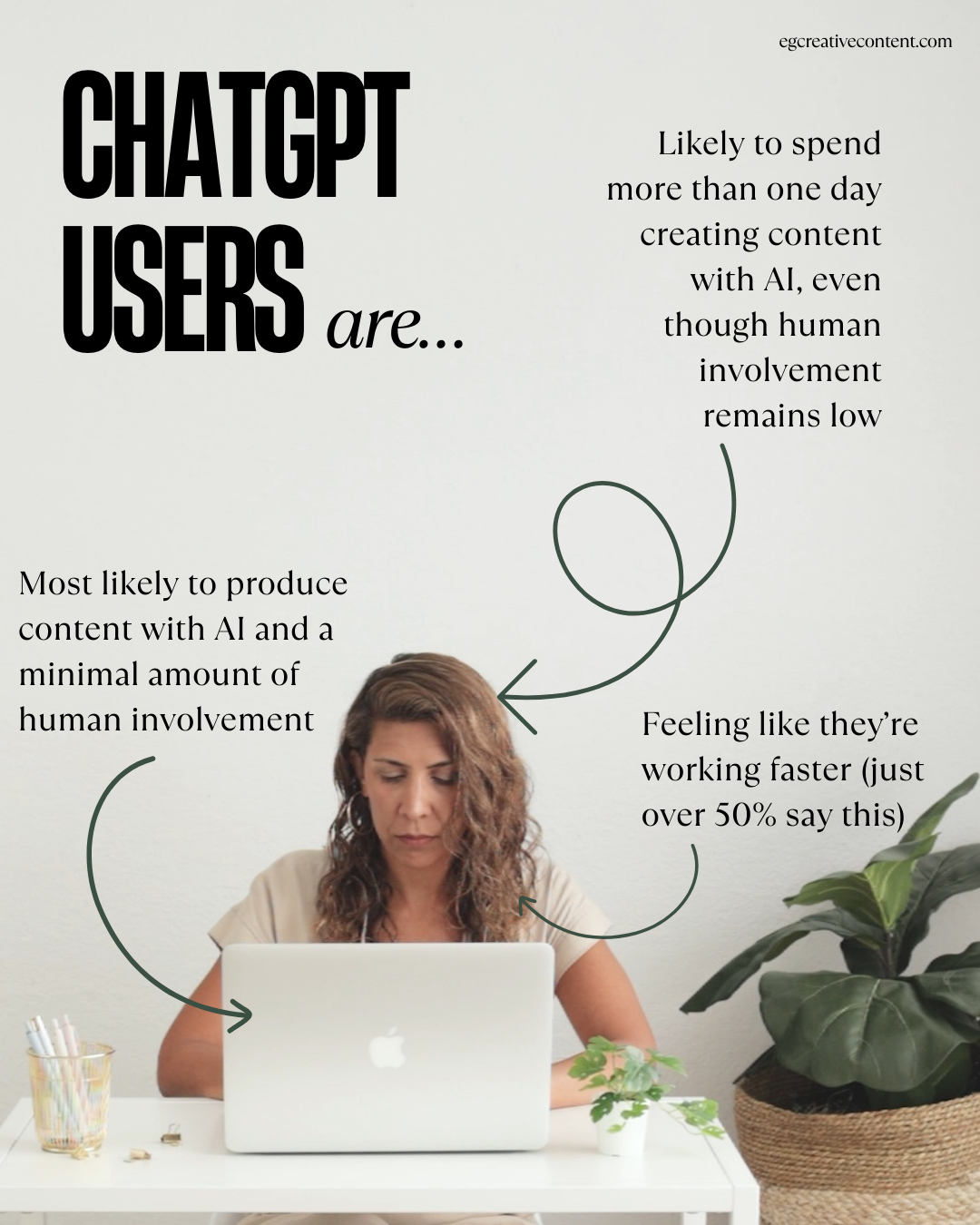
ChatGPT Users
Just over 50% of people who use ChatGPT largely feel like they're working faster — but they're also not as involved in the content generation process as people who choose other platforms are.
- 40.86% of ChatGPT users say they produce content in less than one workday.
- Slightly over 59% still spend one full workday (or more) working on content.
- But 45% of users are publishing the AI's output without editing it.
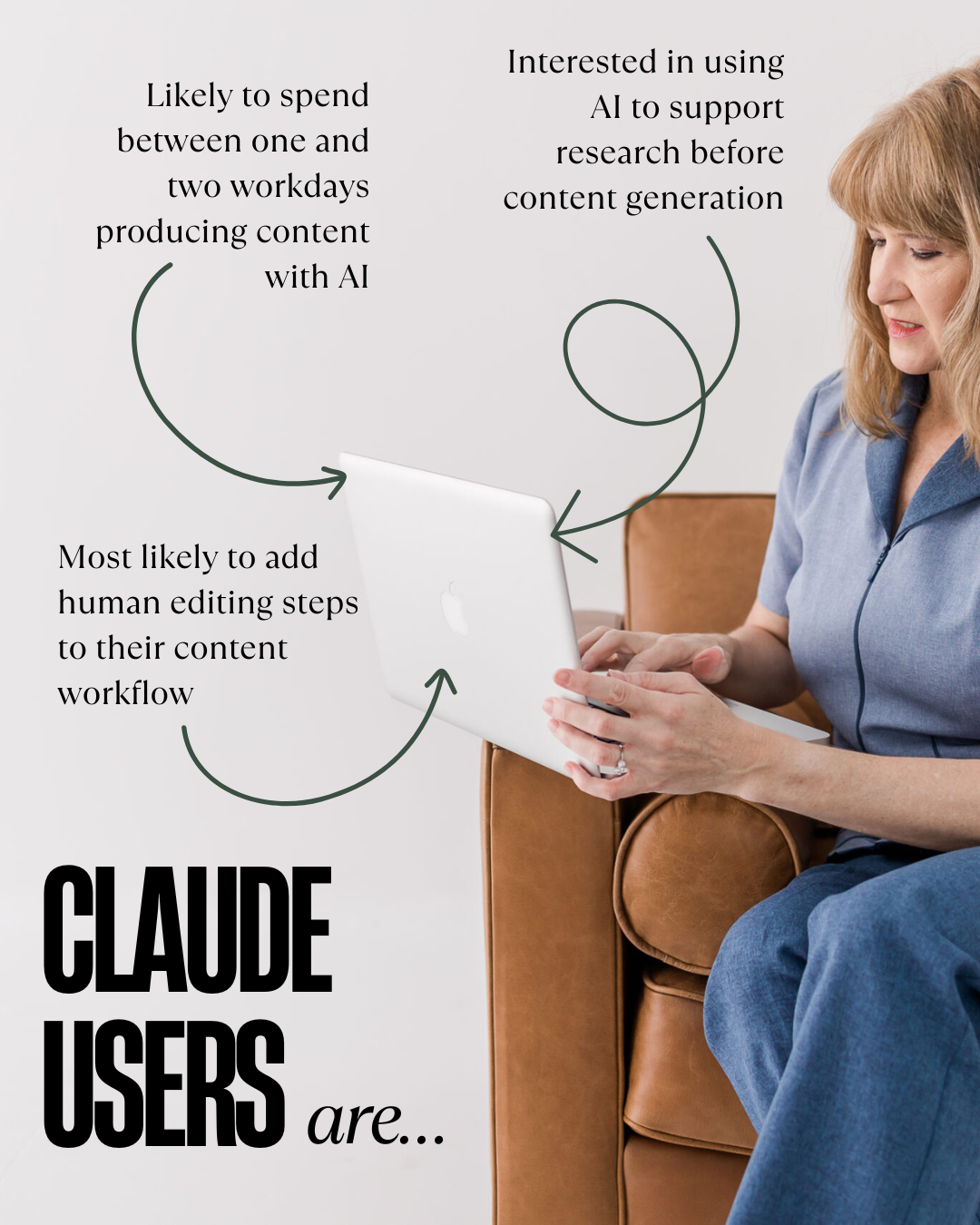
Claude Users
Claude users are much more likely to edit their content than ChatGPT users, and this in turn has an effect on the overall turnaround time between prompt and publish. It's not taking Claude users that much longer to publish blog posts, though, which is interesting — and shows that editing alone isn't the key driver behind a fast or slow content production process with AI.
- 62.5% of Claude users spend between one and two workdays using AI to produce written content.
- Only 25% go from prompt to publish without editing.
- 62.5% of Claude users also feel that they work faster with Claude than without it.
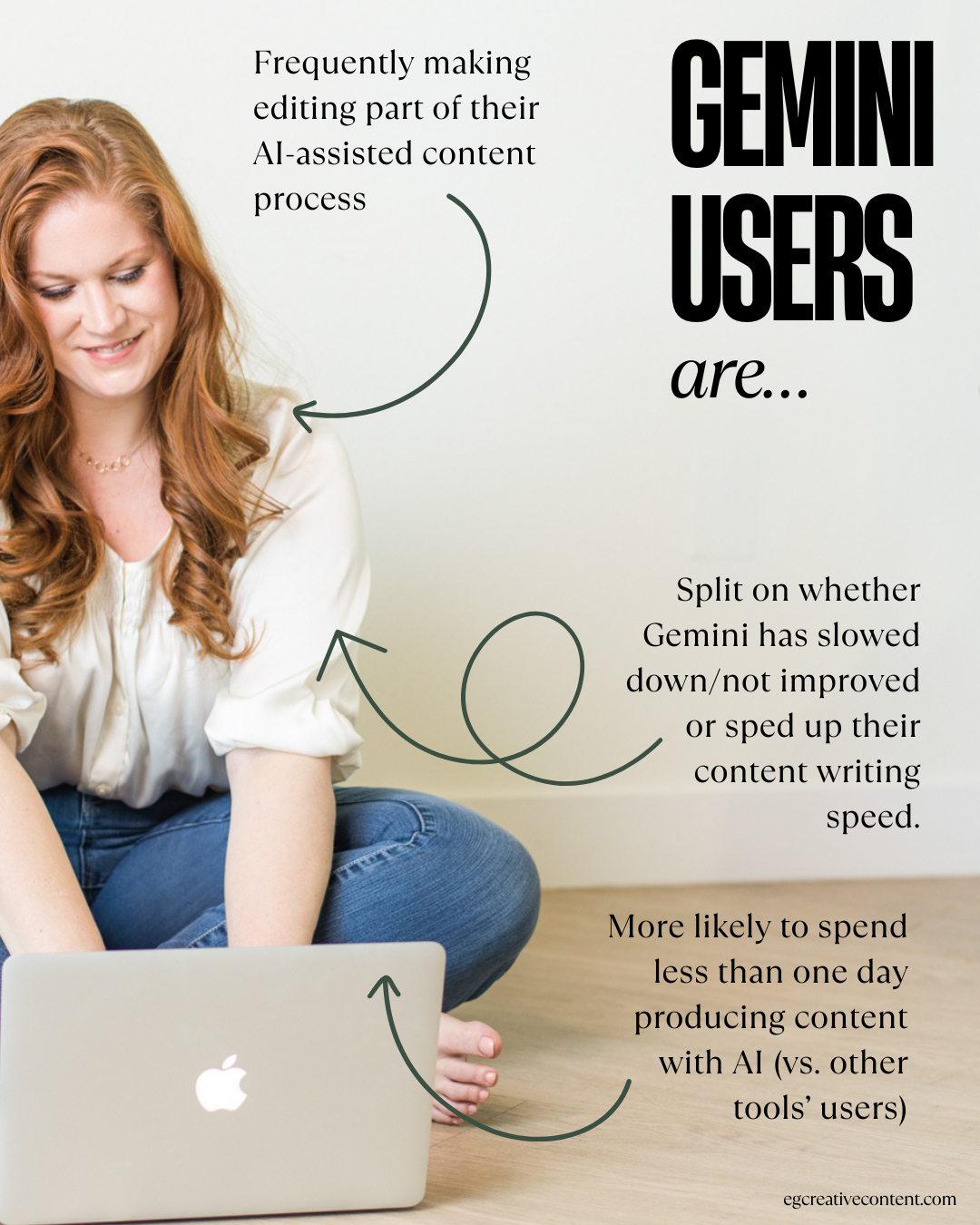
Gemini users
People who use Google Gemini to create content work quickly, but are split on whether or not the tool actually makes them any faster. Interestingly, Gemini is also the only tool that's embedded in a writing application, which could influence the fact that these users typically have a longer writing process than ChatGPT or Claude fans do.
- 50% of Gemini users produce content in under one workday.
- The group is evenly split between people who think Gemini makes them faster and those who find it's slowed them down or made no change to their writing speed.
- 60% of Gemini users make editing a part of their AI-assisted content process.
Why aren't content production times faster?
There are several reasons why AI content production timelines aren't as fast as many users and managers hope — but a big reason is that these tools don't add any kind of structure into the process. You can tell ChatGPT to generate a 500-word blog post, and you might get something close to that ballpark ... or totally off. And each of these tools applies different style and formatting to outputs, which may or may not align with what your audience expects to find in search results and on your website.
How to make writing faster with or without AI
To make the writing process faster, you need to:
- Know what kind of content you should create (based on what the average searcher is expecting and needing)
- Apply a specific header structure to your article (this communicates topic importance to both people and search engines / AI)
- Have a repeatable structure to follow each time you sit down to write — no spinning your wheels (or trying to reinvent said wheel)
I've taken my 15+ years of content writing experience and developed a library of straightforward templates that you can use to pick out the right type of content, write it, and format it in hours ... not days. And because it's a repeatable, customizable system, you'll get consistent results — without weird surprises because Sam Altman decided to update how ChatGPT works.
Interested? Check out the Simple Blogging System here and grab a copy to use with your team for faster, more reliable content results.