


Every year there's a deluge of what you must do in SEO / AEO / GEO now, here's what's changing, don't get left behind...but SEO changes constantly. The new year doesn't have a lot to do with it.
That said, the new year is a good time to re-evaluate your SEO strategies and figure out what you need to change or do so you're in line with current best practices. It's also a good time to stop doing stuff that isn't necessary. You're too busy for that.
Here's what I recommend you check and do to strengthen your SEO in 2027. in 2027.
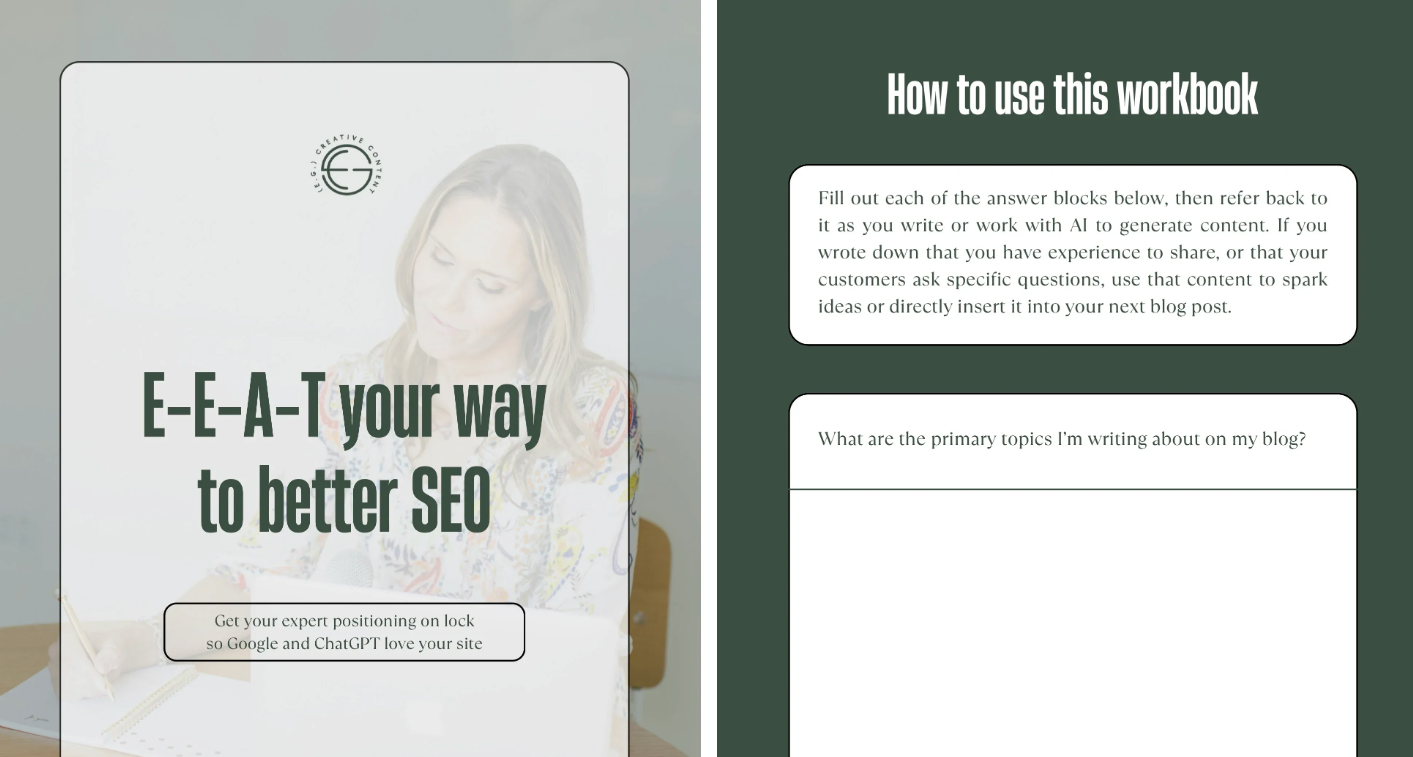
1) E-E-A-T content
Quality is way more important than quantity right now. You don't need to churn out a steady stream of multiple generic articles every week. Instead, focus on producing the highest quality content you can on the most regular cadence you can.
Ideally, you'll be publishing at least once a week. If you're managing your company's marketing all by yourself, maybe that'll need to be a little longer—biweekly or even monthly if you must. Focus on answering questions people are asking using well-researched content with high E-E-A-T value.
 Emily Gertenbach
2) Balanced content
It's tempting to write content that always positions you or your brand as the #1 choice for everyone in every situation with every need.
But that's not realistic, and search engines know it. Even though it can feel like we're dealing with machines when we publish content, those machines are designed to look for what a human will get value from. And humans get value from balanced takes, not constant sales pushes.
I will often write articles for my clients in which we're evaluating them versus a competitor, and I never trash the competitor. I also never position my client as the only good option for every scenario. Instead, I'll take an approach like this:
Example 1: If you need [ABC], then Client Company is great. But Client Company isn't built for [use case XYZ]. If that describes you, you'll probably want to take a closer look at Competitor A. Here's why:
Example 2: Competitor A is built with [audience type ABC] in mind. And a lot of [audience type ABC] really like Competitor A thanks to [feature]. Client Company takes that one step further though, by adding [feature] into the process. Now, instead of doing [action from Competitor A], you can simply [easier action from Client] and get the answers you need in half the time.
Example 3: Competitor A is best for [use case 1]. And we like how Competitor B handles [use case 2]. They're good tools, but they're expensive. If your budget doesn't match up with A or B, you'll be able to do more, at the right price, with Client Company's free plan. Unlike A, we don't charge for [feature 1], and you only pay for what you need when using [feature 2].
You don't serve everyone and you don't want your content to create a lot of unqualified, invalid leads. You want to get the right people buying or signing up for a service. And being honest about what you really are and aren't best for is key.
3) Semantic keywords and fan-out queries
Semantic keywords are individual terms that provide additional context around what you're writing. For example, if I'm writing about marketing content I could be talking about B2C marketing or B2B marketing.
If I'm writing about B2C marketing content, I'd want to use supporting phrases like consumer, customer, loyalty program, checkout.
But for B2B, where we typically use different terms to refer to buyers and processes, I'd use terms like client, account, referral, contract, license.
This is a very top level example; semantic keywords can get much more specific than these.
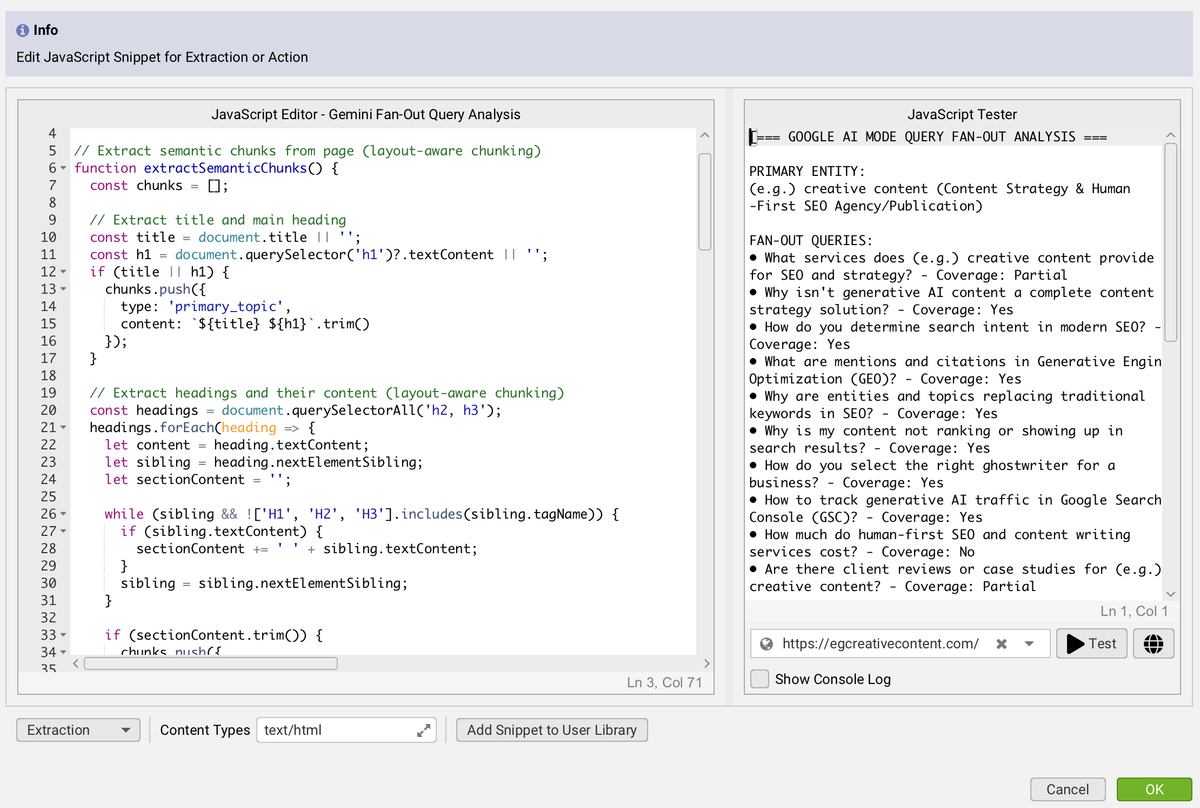
You'll also want to use fan-out queries, which are the additional questions an AI tool searches for when a user inputs a prompt. For example, I wrote an article about entities earlier this year. The main question I'm answering is "what are SEO entities?" But if someone's chatting to an AI tool about this topic, the AI is likely to also run a web search for:
- What is the difference between keywords and entities in SEO?
- How to create an entity-based SEO strategy step-by-step?
- What SEO tools can extract or analyze website entities?
- How to conduct competitor entity research for content planning?
- How to use AI tools or LLMs to audit web page entities?
- How to map existing target keywords into entity topic clusters?
- How does Google's Knowledge Graph process entities for search ranking?
- What is the role of Schema markup in entity-based SEO?
- How do AI search engines assess topic and entity accuracy on web pages?
I don't answer every single question, because some of them aren't relevant to the purpose of my article or my expected audience. Some of these questions would deserve their own article to fully explain the answer. But by answering multiple fan-out query questions in one piece, I can improve the rate at which my article is cited or mentioned by an AI tool.
 Emily Gertenbach
4) Questions...but not always FAQs
Some SEO analysis tools are still flagging pages as "not optimized" if they don't include FAQ schema. This is no longer relevant when used strictly for SEO purposes. The schema was so heavily and improperly overused as a "GEO hack" earlier in 2026 that Google depreciated it in search results.
You can and should still have and answer questions, but you don't need an FAQ on every page. Try to use questions naturally in the body of your content and reserve FAQs for things like landing pages where you really do have frequently asked questions to show regarding services, price, and so forth.
 Emily Gertenbach
5) Text content
Videos and images absolutely show up in some AI search results, but search engine and AI crawlers primarily process text. If you make a lot of video or audio content, it's a good idea to publish a text summary (such as turning your transcript into a blog post) or even just the plain transcript itself on your website. This will give the crawlers easy access to text versions of what you're producing.
You don't, however, need to create duplicate "plain text" versions of your normal website. Crawlers are more than able to process the text on a page—in fact, that's what crawlers "see." They aren't picking up your design and all the colors, instead, they're seeing what's in the code. And that includes your content.
So just publish normal webpages and make sure that there's text-based versions of your video and audio content wherever possible.
Learn more about how to improve your website content in 2027
This is a recording of a webinar I gave earlier in 2026, but it's all still applicable to 2027. If you're thinking about how to improve the reach of your content in organic (including AI search) this year, check this out:
If you want some more specific advice or need to talk through your specific business website content needs, contact me to book a consultation!